2.1 Multi-Platform Data Aggregation Capability
In cross-border eCommerce, businesses typically operate across multiple platforms such as Amazon, Walmart, and Shopee. Each platform provides data in its own reporting structure, with inconsistent column formats, recognition logic, and classification standards.
Aggregating data in Excel requires a manual workflow: downloading reports, standardizing formats, and consolidating them into a central spreadsheet. Every step in this process introduces potential errors, from copy-paste mistakes and column misalignment to inconsistencies in transaction mapping.
The risk becomes more severe when platforms update their reporting structures without backward compatibility. In such cases, the entire system of formulas in Excel can break silently, causing financial reports to no longer reflect actual business performance.
Tools that support multi-platform data aggregation for eCommerce sellers, such as Genbook, can be considered as alternatives.
2.2 Multi-Currency Reconciliation Capability
Cross-border eCommerce businesses operate in a multi-currency environment, involving continuous transactions across CNY, USD, and VND. Activities such as sourcing, logistics payments, platform payouts, and currency conversion create a highly complex financial system.
Excel lacks the ability to automatically record exchange rates at the time each transaction occurs in accordance with accrual accounting standards. Manual processing requires looking up and entering exchange rates line by line, significantly increasing the risk of errors.
Over time, small inconsistencies in exchange rates can accumulate into material discrepancies, directly impacting profit reporting, gross margins, and cash flow forecasting.
2.3 Inventory Valuation at Scale
Inventory is one of the most valuable assets in eCommerce, and also one of the most difficult to manage accurately using Excel.
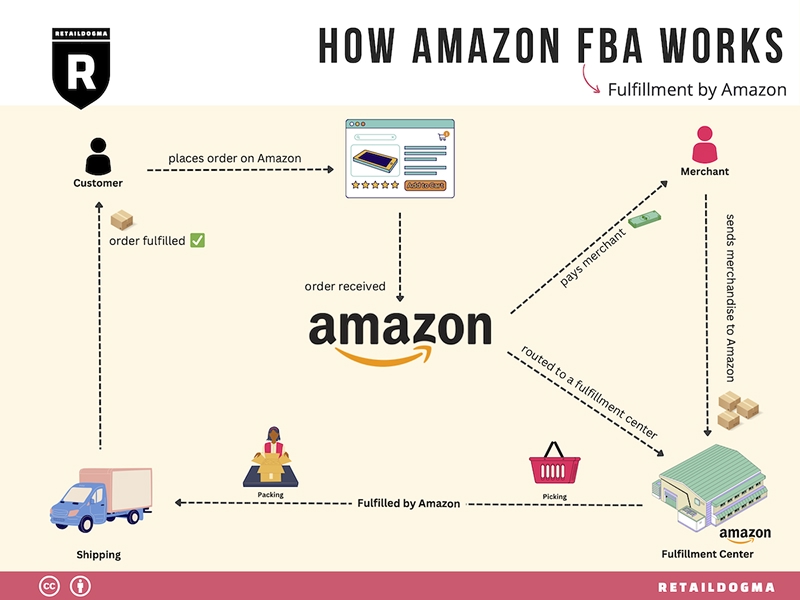
Applying accounting methods such as First In, First Out (FIFO) or Weighted Average Cost requires tracking inventory by batch, by receipt timing, and by SKU. As businesses scale to hundreds of SKUs and multiple warehouses—including FBA systems, the complexity increases exponentially.
Excel is not designed to handle multi-layered inventory logic at scale. As a result, formulas become difficult to maintain, prone to errors, and lack independent validation.
*Weighted Average Cost calculates inventory cost by dividing total inventory value by total inventory quantity to determine the average cost per unit.
2.4 Multi-Jurisdiction Tax Compliance
Cross-border eCommerce places businesses in a multi-jurisdiction tax environment. A company may simultaneously have tax obligations in Vietnam, the United States, and legal hubs such as Singapore or Hong Kong, depending on its corporate structure.
In the U.S., sales tax nexus rules vary by state. In Vietnam, VAT refunds for export goods require strict documentation. Meanwhile, jurisdictions like Singapore and Hong Kong follow different accounting standards and corporate tax regulations.
Excel does not provide built-in mechanisms to integrate jurisdiction-specific tax rules, nor does it support standardized data structures for multi-country tax reporting. This creates significant compliance gaps in the financial system.
2.5 Data Integrity and Audit Trail
One of the most critical risks of using Excel in eCommerce accounting is the lack of data integrity controls and traceability.
In collaborative environments, errors such as overwritten formulas, deleted rows, or incorrect data entry can occur without leaving a complete audit trail. Excel does not provide robust audit logs, role-based access control, or full historical tracking beyond limited session history.
In the context of audits or due diligence, the inability to explain the origin and calculation methodology of financial figures significantly undermines the credibility of the entire reporting system.
.svg)
.svg)