From July 27, 2026, regulations on the Certificate of Household Business Registration have been revised under
Decree 168/2025/ND-CP. Individuals and households registering a household business should pay attention to the new requirements concerning conditions for household business registration, the required registration documents, and registration procedures.
This article summarizes the key points to know when registering a household business, from eligibility requirements and required documents to submission procedures and the issuance of the Certificate of Household Business Registration under current regulations.
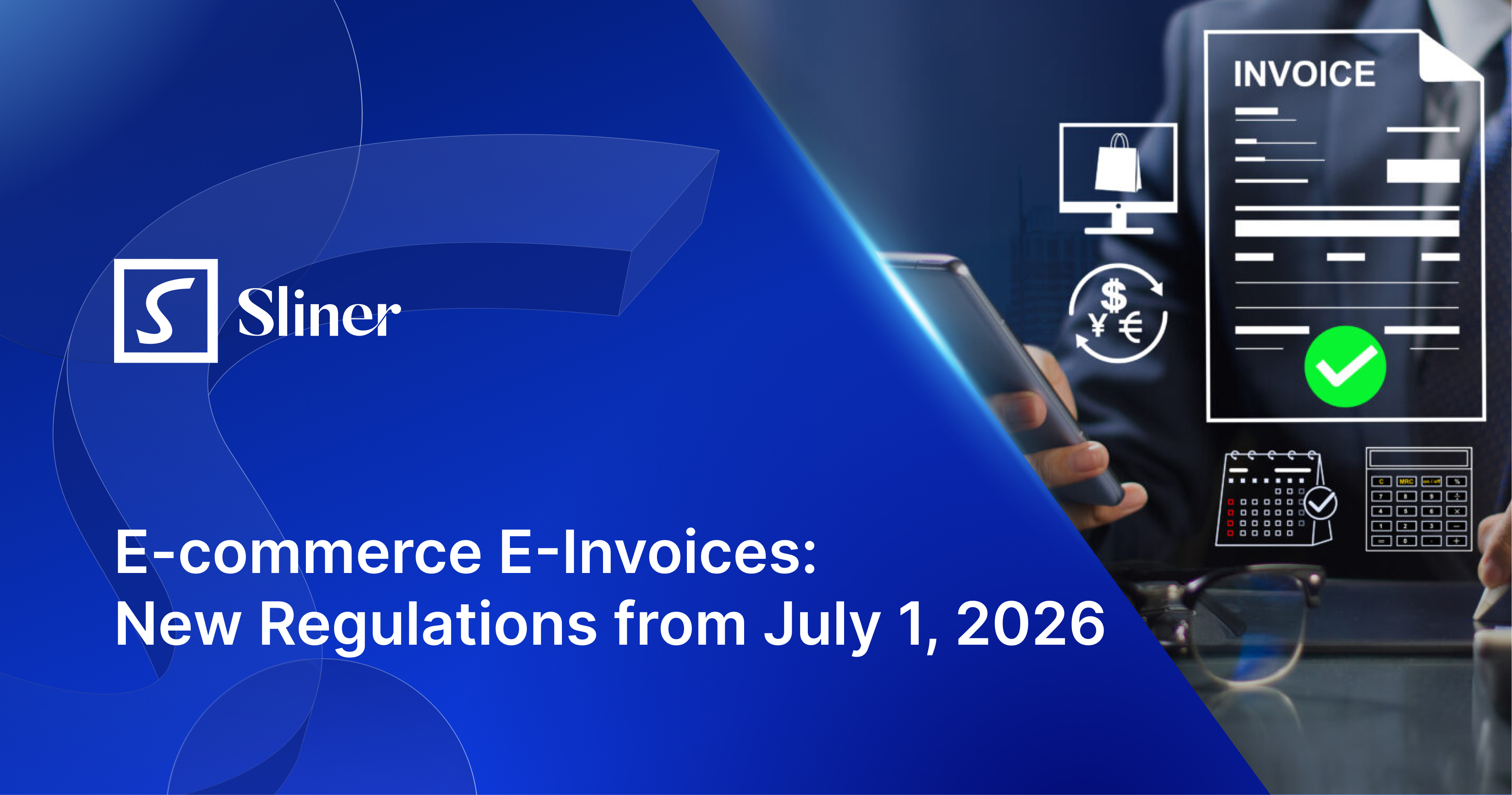
1. What Are E-commerce E-Invoices and How Do They Differ from Other E-Invoices?
E-commerce e-invoices are invoices created, digitally signed, transmitted, and stored in electronic form for transactions involving the sale of goods or provision of services through e-commerce platforms. For household businesses that complete household business registration and sell through online marketplaces, identifying the appropriate type of invoice is an important part of their operational and tax compliance processes.
In terms of mandatory contents, e-commerce e-invoices do not differ from conventional e-invoices. The key difference lies in the data source: these invoices rely on order information and delivery status confirmed by the platform, rather than information recorded independently by the seller.
The following three concepts are often used interchangeably, which can lead to sellers registering for the wrong type of invoice with the tax authority and having to redo the entire application:
A household business that sells both at a physical store and through online marketplaces may be required to use the first two types of invoices concurrently, depending on the sales channel through which each transaction occurs. Sellers should therefore identify the appropriate invoice type from the beginning of their business operations.
2. Who Is Required to Issue E-commerce E-Invoices under Decree 254/2026/ND-CP?
This serves as the new legal framework for regulations on entities subject to e-invoice requirements, invoice contents, issuance timing, and e-invoice administration, including invoices arising from e-commerce activities.
2.1. Businesses Selling Through E-commerce Platforms
Businesses are required to issue e-invoices when selling goods or providing services, regardless of their revenue level. The same obligation applies whether the transaction takes place directly or through an e-commerce platform.
2.2. The VND 1 Billion Threshold for Household Businesses and Individuals
This is one of the most important considerations for e-commerce e-invoices applicable to household businesses. Under Point d, Clause 1, Article 6 of
Decree 254/2026/ND-CP, household businesses and individuals with annual revenue exceeding VND 1 billion, or those selling assets subject to ownership or usage registration, are required to use e-invoices in accordance with the applicable regulations.
Household businesses with annual revenue below VND 1 billion are not required to use e-invoices, but may still register to use them if needed. In practice, multi-platform sellers may exceed the threshold sooner than expected because revenue from multiple stores is aggregated. Monitoring cumulative annual revenue is therefore more important than estimating revenue on a monthly basis.
2.3. Tax Withholding and Payment by Platforms Does Not Replace the Invoice Issuance Obligation
The fact that an e-commerce platform withholds, declares, and pays tax on behalf of the seller does not mean that the seller is exempt from issuing e-commerce e-invoices. These are two separate obligations: the seller is responsible for issuing invoices, while the platform is responsible for withholding and remitting tax in accordance with the relevant regulations.
Therefore, in addition to understanding the conditions for household business registration, required household business registration documents, and
household business registration procedures under
Decree 168/2025/ND-CP, sellers should also determine their e-invoice obligations from the beginning of their business operations.
3. When Must E-commerce E-Invoices Be Issued?
Under
Article 9 of Decree 254/2026/ND-CP, the time of invoice issuance for the sale of goods is the time when ownership or the right to use the goods is transferred to the buyer, regardless of whether payment has been received. For sales through e-commerce platforms, this point is determined when the goods are successfully delivered, rather than when the customer places the order or when the platform reconciles and transfers the proceeds to the seller.
Accordingly, sellers should use delivery status as the basis for issuing e-commerce e-invoices, rather than the date payment is received or the date the order is created. These approaches may result in revenue being recorded in the wrong tax period or create the need to adjust invoices when orders are cancelled or returned.
4. How to Handle Cases Where E-commerce Platforms Conceal Buyer Information
E-commerce platforms may conceal part of the buyer's information to protect personal data. However, the absence of information on the seller interface does not mean that the seller is exempt from issuing an invoice. The key issue is how the seller obtains the required information and how the invoice should be handled when the buyer does not provide it.
4.1. Sellers Have the Right to Request Buyer Information from the Platform
4.2. What If the Buyer Does Not Provide Their Information?
If the buyer provides their name, address, or personal identification number, the seller should use this information to issue the invoice. If the buyer does not provide such information, the invoice should be issued in accordance with the regulations applicable to consumers.
An important point to note is that an invoice without sufficient buyer information may not meet the requirements for an organization or business to use it as a basis for recording expenses or tax finalization. Therefore, shops with a significant number of business customers should determine their invoicing requirements when completing household business registration and agreeing on the transaction terms.
For further guidance on issuing invoices in this situation, see
[HERE].
4.3. Multiple Orders Cannot Be Consolidated into a Single Invoice
Under
Article 26 of Law on Tax Administration No. 108/2025/QH15, sellers must issue an e-invoice to each buyer when selling goods. The tax authority has directly addressed a case involving a household business processing 700 to 800 low-value orders per day: invoices must still be issued to each buyer and cannot be consolidated into a single daily invoice. The Decree provides for certain specific cases where a consolidated invoice may be issued at the end of the day, but sales through e-commerce platforms are not included in these cases. For shops processing hundreds of orders per day, manually issuing an invoice for every order is therefore operationally impractical, rather than simply inconvenient.
5. Risks Arising from Differences Between Platform Revenue and Issued Invoices
The new management mechanism enables tax authorities to compare transaction data provided by e-commerce platforms with e-commerce e-invoice data issued by sellers. As a result, discrepancies between platform revenue and revenue reflected in issued invoices may be identified during the data reconciliation process.
If a discrepancy cannot be explained or is determined to represent revenue for which no invoice was issued, the seller may be subject to additional tax assessments and late-payment interest. On the other hand, buyers may also face risks if an invalid invoice does not meet the requirements for recording expenses or declaring tax.
Therefore, rather than checking only at the tax filing stage, sellers should reconcile platform revenue and issued invoices on a regular basis and identify the cause of any discrepancy as soon as it arises.
6. E-commerce E-invoice Workflow for Multi-platform Shops
For shops processing hundreds of orders per day, e-commerce e-invoice management should be structured as a standardized workflow:
-
Centralize data: Connect order data from different platforms and separate it by store and legal entity.
-
Identify orders eligible for invoicing: Filter orders based on successful delivery status and exclude cancelled and returned orders.
-
Issue invoices: Automatically use buyer information provided by the platform or record the invoice in accordance with applicable regulations when such information is unavailable.
-
Three-way reconciliation: Reconcile platform revenue, issued invoices, and actual amounts received.
Among these steps, reconciliation is particularly important as it helps identify orders for which invoices have not been issued, revenue discrepancies, and inconsistencies between platform data and accounting data at an early stage.
7. Sliner Helps Sellers Automate E-invoice Issuance
For multi-platform sellers, issuing e-commerce e-invoices is not only a compliance requirement but also an operational challenge as order volumes increase. When order, invoice, and revenue data are not connected, discrepancies can accumulate and become difficult to resolve during reconciliation.
Sliner supports sellers in automating the e-invoice issuance process based on order data, from synchronizing data across platforms and identifying orders eligible for invoicing to processing buyer information and reconciling invoice data against actual revenue. The process is designed for sellers with high order volumes operating across multiple platforms and international e-commerce marketplaces.

.svg)